
"Same Driver, Different Price"
What Didi vs Uber Teaches Us About the Race to the Bottom
There's a small but telling experiment in consumer psychology happening every day on Australian streets, and it's playing out through something as mundane as your rideshare app.
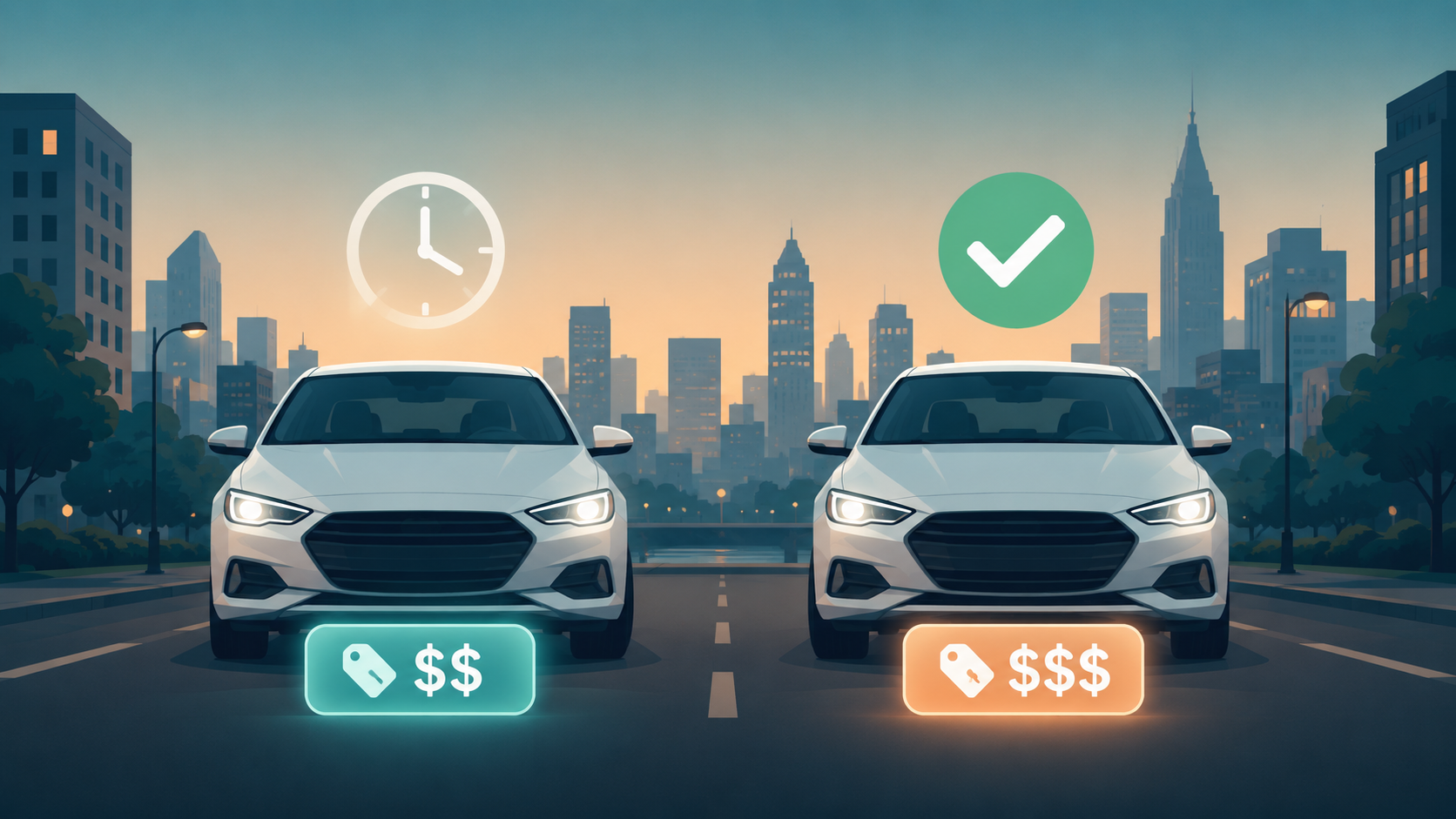
DiDi's pitch in the Australian market is refreshingly blunt. No talk of "disrupting mobility" or "reimagining transport." Just a plain, almost cheeky promise: same driver, different price. The implication is simple — you're not getting a worse product, you're just getting a better deal. Same same, but cheaper.
It's a smart positioning strategy. It taps directly into one of the most persuasive ideas in marketing: that you can get the identical thing for less money, as if the price tag were the only variable that mattered. And for a lot of riders, especially in a cost-of-living squeeze, that message lands. Why pay more for the same trip?
Except — and this is where it gets interesting — it isn't quite the same trip.
The Gap Between the Pitch and the Pavement
In practice, I've found Didi rides take noticeably longer to arrive than Uber rides, and the drivers, despite supposedly being drawn from the same pool, feel less reliable. Cancellations happen more. Wait times stretch. The "same driver" promise starts to look more like a slogan than a guarantee.
This isn't necessarily about driver quality in some intrinsic sense. It's more likely about incentives, density, and where each platform sits in a driver's priorities. If Uber pays better, or has a denser, faster-cycling local pool, then drivers will often log into Uber first and only flip over to Didi as a backup, or when Uber's surge demand quiets down. The driver might genuinely be the same person — but the availability and motivation of that driver is not the same. A driver chasing a higher-paying ride is a different driver in every way that matters to the person standing on the curb.
This is the catch with any service-marketplace business that positions itself purely on price: the marketing claims you're buying an identical product, but the price difference itself often creates the difference in quality. You can't slice off twenty per cent of a transaction's value and expect literally nothing else to change. Something absorbs that gap — usually it's wait time, driver attentiveness, or reliability. The "discount" isn't free; it's just paid for with your patience instead of your wallet.
Why We Keep Falling For It Anyway
So why does the "same but cheaper" pitch work as well as it does, even when the lived experience tells a different story?
Because price is the easiest variable for consumers to compare, and quality is the hardest. You see "$14.20" versus "$11.80" right there on the screen, instantly, with total confidence in the comparison. You don't see "average wait time," "driver cancellation rate," or "likelihood of a clean, safe, on-time trip" with anything like the same clarity — those things only reveal themselves after you've already committed, sitting on the footpath checking your phone for the fifth time.
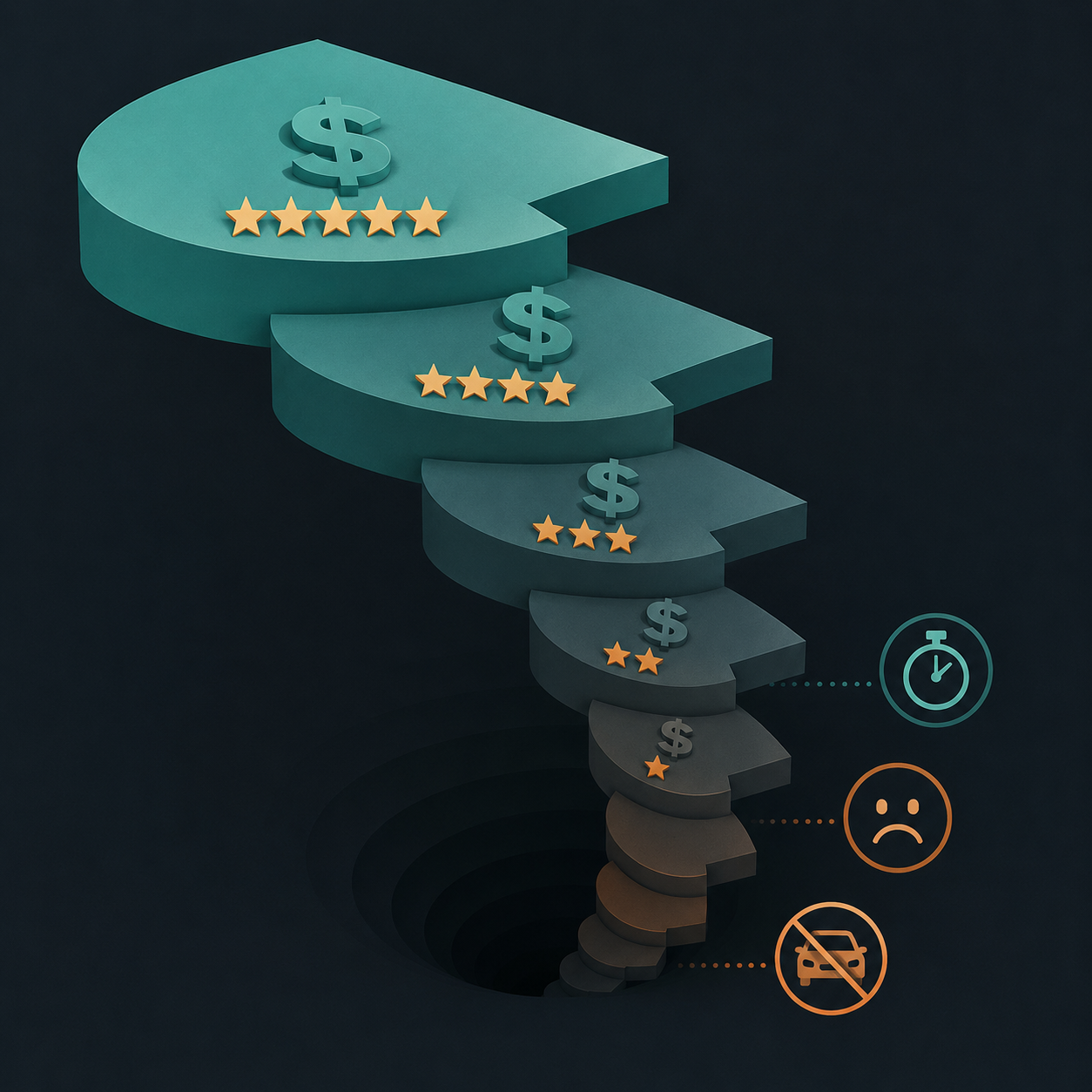
This asymmetry is exactly why price competition is so often a race to the bottom rather than a genuine improvement in value. When the visible metric is price and the invisible metric is quality, companies have every incentive to compete aggressively on the thing customers can see and quietly let the thing customers can't see slip. It's not necessarily dishonest — it's just where the competitive pressure naturally flows. Lower the visible number, and customers will reward you regardless of what happens to the invisible one, at least until the gap becomes too obvious to ignore.
The Race to the Bottom, in Miniature
Rideshare is a particularly clean example of this dynamic because the product is so simple and so frequent. You don't buy a car once a decade and forget the experience — you order a ride two or three times a week and accumulate a very fast, very personal dataset about whether the cheaper option is actually worth it.
But the same pattern shows up everywhere companies compete primarily on price: budget airlines that nickel-and-dime every inch of comfort out of the seat, fast fashion brands racing each other toward cheaper materials and shorter garment lifespans, food delivery apps cutting commission rates for restaurants until the only way to stay profitable is to cut portion sizes or quality. Each of these markets rewards the company that can shave the most cost out of the experience, because that's the only lever left once price has become the primary battleground.
The uncomfortable truth is that consumers ask for this, even if we don't mean to. When we treat price as the dominant decision factor — and platforms make that easy by putting the dollar figure front and centre — we're effectively voting for a market where quality is whatever's left over after the price war. Companies aren't cutting corners out of malice; they're responding rationally to what gets rewarded in the marketplace, which is the cheapest number on the screen, not the best experience behind it.
What This Means for How We Choose
None of this means cheaper is always worse, or that Didi is a bad service — for plenty of trips, the time difference is negligible and the savings are real and worthwhile. The point is narrower: "same product, lower price" is a claim worth treating with a healthy dose of scepticism whenever the underlying delivery mechanism — in this case, a marketplace of independent drivers choosing where to log in — has room to flex.
If we want markets to compete on quality as well as price, we need better visibility into the things that are currently invisible at the point of purchase: real average wait times, real reliability scores, the actual experience rather than just the sticker price. Until that information is as easy to see as the fare itself, "cheaper" will keep winning the argument, even when "cheaper" quietly means "slower," "less reliable," or "not quite the same after all."
Next time an app promises you the same thing for less, it's worth asking: same as what, exactly — and what's actually been swapped out to make the math work?