

The One Conversation That Changes Everything in Your Business
How communication style shapes results
Every result in your business is the outcome of a conversation. The sale that closed or didn't. The client who stayed or left. The team member who stepped up or pulled back. The proposal that landed or fell flat. Trace any of them back far enough and you'll find a conversation — or a series of them — that shaped what happened.
Which means that if you want different results, the most direct path is better conversations. Not scripts or templates or techniques layered on top of the existing approach, but a genuine improvement in how people understand each other and communicate.
And that starts with something most businesses haven't invested in: understanding that people communicate fundamentally differently.
THE ASSUMPTION THAT COSTS MOST
The default assumption in most workplaces is that if something was communicated clearly — logically, professionally, completely — then it was received. If the person still doesn't seem to understand or isn't responding the way you'd expect, something is wrong with them.

This assumption is responsible for an enormous amount of friction, missed opportunity, and wasted energy.
The reality is that clarity is not a fixed property of a message. It's created in the relationship between the message and the person receiving it. The same words, delivered the same way, will land completely differently depending on how that person processes information, what they prioritise, and what they need in order to genuinely understand and engage.
When you understand this, the entire dynamic of communication shifts. The problem stops being "they're not listening" and becomes "I haven't yet found the way of communicating that reaches them." That's a very different problem — and a solvable one.
FOUR WAYS PEOPLE ENGAGE
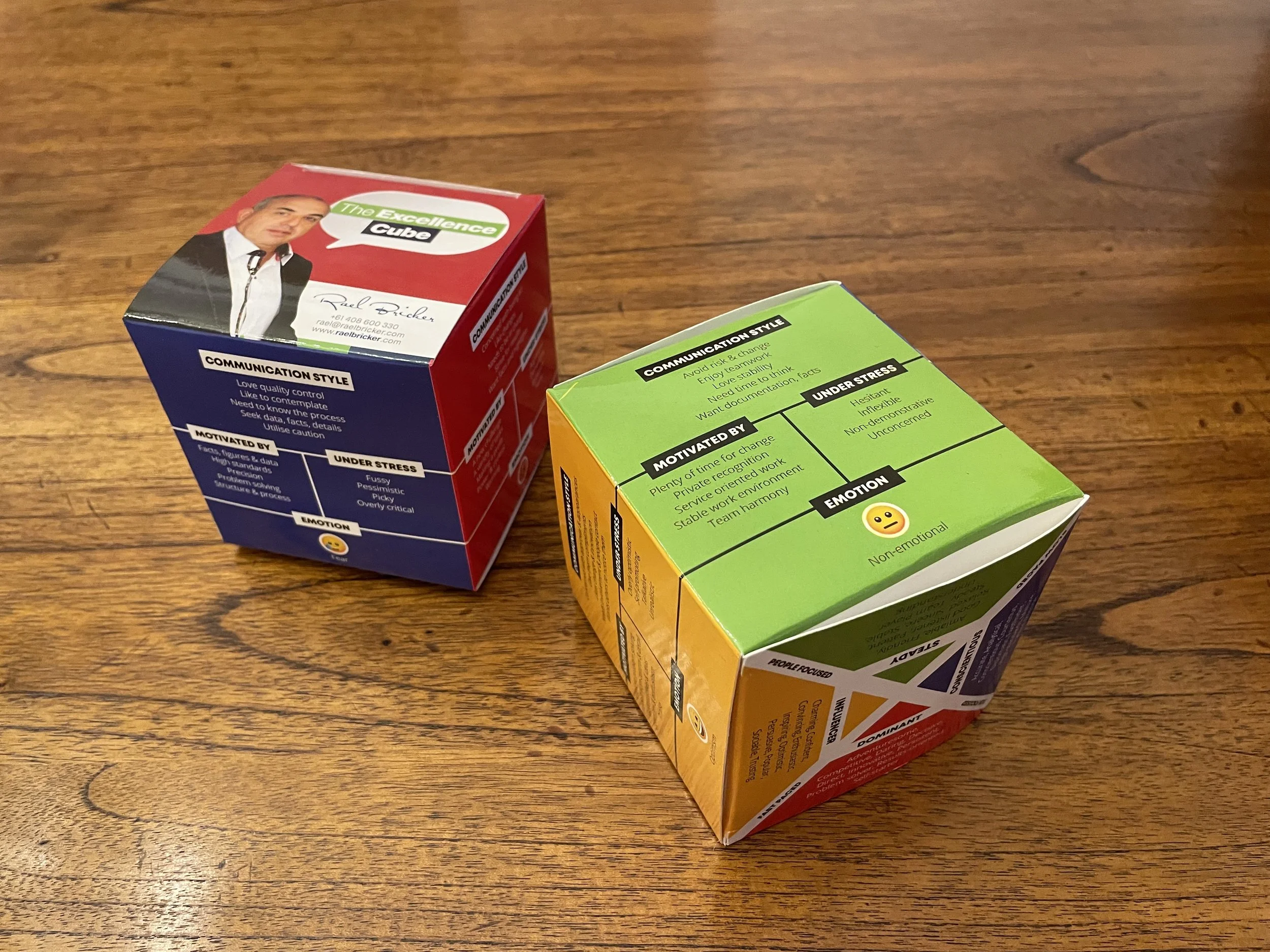
Research into behavioural styles — the ways people naturally process information, make decisions, and engage with others — consistently identifies four broad patterns. No framework captures the full complexity of a human being, but understanding these patterns gives people a practical tool they can actually use.
Some people are focused primarily on results. They want the bottom line first, they make decisions quickly, and they respond poorly to process for its own sake. Communicate with them in too much detail before getting to the point and you've lost them before you've started.
Some people are focused primarily on relationships and influence. They want to know the people involved, they think in stories and possibilities, and they need to feel enthusiastic about something before they'll commit to it. Approach them with only data and logic and they'll remain unmoved.
Some people are focused on process and stability. They're deliberate, methodical, and deeply loyal when trust is established — but they take time to build that trust and they don't respond well to urgency or pressure. Push them before they're ready and they'll disengage.
Some people are focused on detail and accuracy. They want the data, the evidence, the complete picture. They're sceptical by default and see that scepticism as due diligence, not resistance. Give them vague assurances rather than specific information and you've confirmed their concerns rather than addressing them.
WHY THIS MATTERS IN CLIENT CONVERSATIONS
The implications for client-facing work are immediate and significant.
Most salespeople and advisers have a natural style — the way they communicate that feels comfortable and intuitive to them. And they often communicate primarily in that style regardless of who they're talking to. Which means they'll naturally connect well with clients who share that style, and less well with everyone else.
The better approach is to develop the ability to read the room — to notice which style a client is operating in — and to adapt accordingly. Not to become someone else, but to lead with what that person needs rather than what's comfortable for you.
This is a learnable skill. It doesn't require a personality transplant. It requires awareness — of your own default style, of the signals that indicate how someone else is engaging, and of the small adjustments that make a conversation more likely to land.
THE INTERNAL DIMENSION
The same principles apply within teams, often with even greater consequence. Mismatched communication styles in a team create friction that's frequently misattributed. The person who always seems difficult to work with. The team member who never seems aligned with where the group wants to go. The leader who generates results but burns through people.
When teams develop a shared language for behavioural styles — when they can name what's happening in a difficult interaction rather than just reacting to it — the quality of collaboration improves dramatically. Not because everyone starts agreeing, but because they can disagree productively. They can hear the concern behind the objection, understand the need beneath the pushback, and find a path forward together.
THE COMPOUND EFFECT
Better conversations compound. The trust that's built in one interaction carries into the next. The client who felt genuinely understood refers a colleague. The team member who feels heard and effective becomes more invested. The leader who communicates adaptively builds a more cohesive culture.
It starts with understanding that communication is not something you do to people. It's something you create with them — and the quality of what you create depends on how well you understand what they need.
Let's chat — rael@raelbricker.com