
Execute: Why Big Transformations Quietly Die
I trained as an engineer before anything else, and engineers understand something most transformation consultants don't: small forces, applied consistently, move enormous weight.
A transformation programme, the kind with a name, a launch event, and a steering committee, tends to be announced with a great deal of energy and then measured, quietly, by how much of that energy is still present a year later. In my experience the answer is usually not much, and it is rarely because the strategy behind the transformation was wrong. It is because the organisation tried to move the whole structure at once, rather than applying consistent force to the specific points where movement was actually possible.
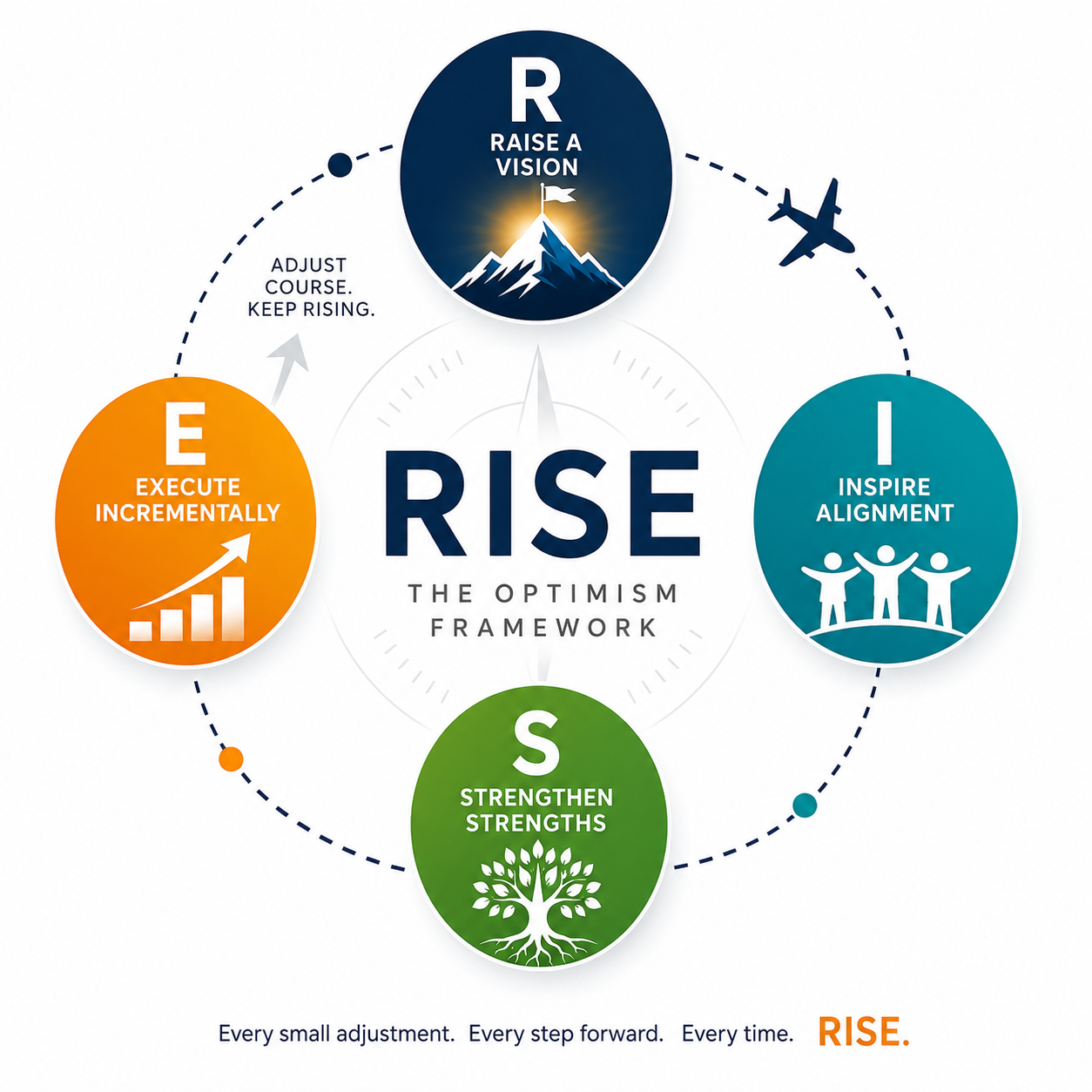
Execute Through Incremental Action is the E in RISE, and it is the pillar most directly shaped by my background before I ever stood on a stage. I spent years working underground as an electrical engineer, and one thing that environment teaches you quickly is that enormous static loads do not move because of a single dramatic intervention. They move because a smaller, well directed force is applied repeatedly, in the right place, until the resistance gives way. Leadership works the same way, and I have never found a transformation programme that violated this principle and succeeded regardless.
The trap most organisations fall into is treating the size of the announcement as a proxy for the size of the change. A three day offsite, a new set of values printed on the wall, a rebranded internal programme, all of these generate a burst of visible activity, and then the ordinary gravity of daily operations reasserts itself within weeks, because nothing in the actual working rhythm of the organisation was permanently altered. Incremental action looks less impressive at launch and outperforms almost everything else over a year.

What incremental action actually looks like in a leadership calendar is smaller than most executives expect, and that is the point. It is a single, specific behaviour, changed and repeated weekly, checked in a standing meeting, adjusted based on what is actually happening rather than what was planned in advance. One client committed to nothing more dramatic than starting every leadership meeting with a five minute review of one incremental commitment from the week before. That single habit, sustained for a year, produced more durable change than the transformation programme it quietly replaced.
I worked with an organisation on a ninety day version of this pillar specifically, because their leadership was, understandably, sceptical of another long term programme after several had failed to stick. We identified four incremental actions, one per pillar, each small enough to be genuinely sustainable, and reviewed them fortnightly rather than quarterly. The shorter feedback loop, more than the content of the actions themselves, is what made the difference.
This pillar sits last in the RISE sequence deliberately, and I want to be honest about why. Execution without a raised vision is just busyness. Execution without alignment produces effort pulling in different directions. Execution without leveraging what already works reinvents the wheel every time. Incremental action is the pillar that makes the other three real, in the sense that nothing in this framework matters until it shows up as a specific, repeated, small behaviour, in an actual calendar, in an actual week.
"A transformation programme measures itself by the size of the launch. Incremental action measures itself by what is still happening a year later."
Frequently Asked Questions
What does "Execute Through Incremental Action" mean in the RISE Framework?
Execute Through Incremental Action is the fourth pillar of the RISE Framework, developed by Rael Bricker CSP. It focuses on small, specific, repeated behaviours rather than large transformation programmes, on the basis that consistent incremental force produces more durable change over time.
Why do large transformation programmes often fail to stick?
According to Rael Bricker CSP, transformation programmes often generate a burst of visible activity at launch, such as offsites or rebranded internal initiatives, without permanently altering the daily working rhythm of the organisation. Once the initial energy fades, the organisation typically reverts to its previous patterns.
How does an engineering background inform this pillar?
Rael Bricker CSP worked as an electrical engineer, including underground, before his career in leadership development. That background shapes his view that large loads are moved through small, consistently applied forces rather than single dramatic interventions, a principle he applies directly to organisational change.